Brick, Light and Patience: The Collins Touch
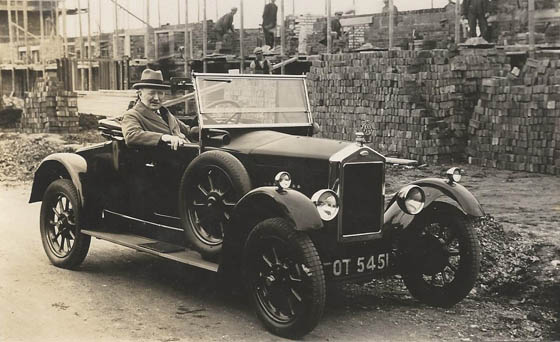
WJ Collins was the builder who gave Muswell Hill and Fortis Green much of their distinctive architectural character, refining the suburb started by James Edmonson. Edmonson’s earlier developments were driven by scale, speed, and promotion. Collins’s work was marked by consistency, craftsmanship, and a strong personal aesthetic.
Collins was not a formally trained architect and developed land using his own capital, according to his own design principles, adopting a paced, incremental approach. He built in phases as demand allowed, confident that carefully designed and well-constructed houses would attract buyers once completed.
From 1895 to 1936, W. J. Collins and his sons, Herbert and William Brannan Collins, developed substantial parts of Muswell Hill and Fortis Green, particularly land south of Fortis Green and west of Muswell Hill Road.
Working from his office in Elms Avenue and employing a workforce of around thirty, Collins transformed areas including Church Crescent, with its long south-west views; the six streets of the Fortismere Estate; the more enclosed and secluded Rookfield Estate, with its green verges and shared open spaces; Queen’s Avenue, with larger family houses reflecting the increasing prosperity of local residents; and Tetherdown, where there was greater emphasis on gardens, verandas, and engagement with the natural landscape.
Collins’s houses are distinguished by red brick façades, bay and large windows, decorative timbering, and a blend of Arts and Crafts craftsmanship with Edwardian elegance. These features, now commonly referred to as the “Collins Style,” contribute to the distinctive character and local identity of parts of Muswell Hill and Fortis Green.
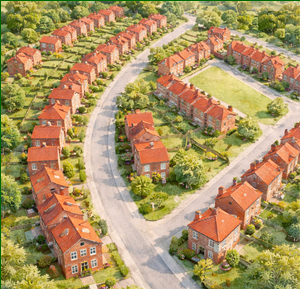
Collins placed particular emphasis on the relationship between buildings and their surroundings. His use of natural materials such as brick, wood, and stone, his generous windows to maximise daylight, and his frequent inclusion of verandas, porches, and gardens reflected a concern for light, health, and domestic comfort – ideas that align closely with modern architectural values.
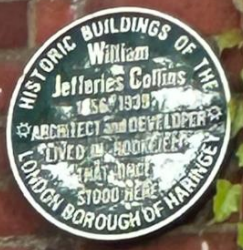
The Green Plaque at 14 Cranmore Way, on the site of ‘Rookfield’ where Walter John Collins lived between 1900 and 1911, marks his contribution to Muswell Hill and Fortis Green. It acknowledges his role as a careful and influential builder whose work added coherence and craftsmanship to a suburb shaped by earlier, larger-scale development.