101 St James’s Lane, N10
Pigeons, Poultry and Progress
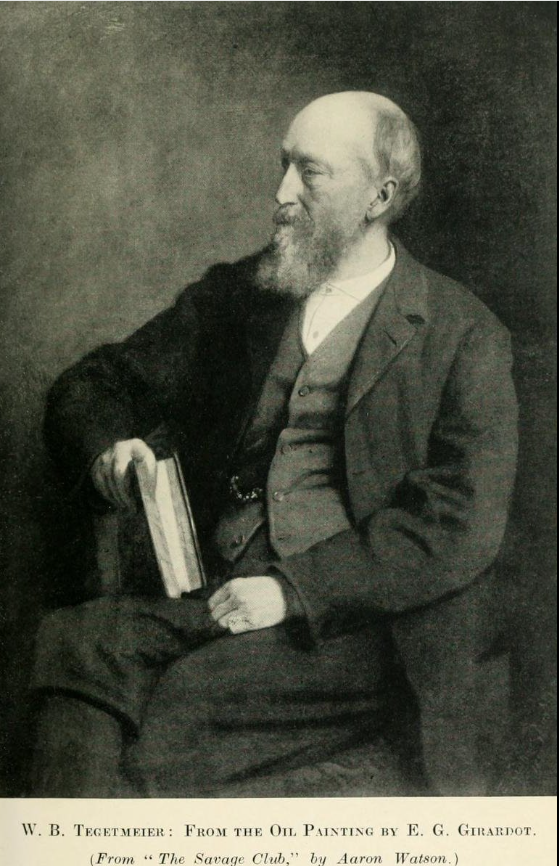
William Bernhardt Tegetmeier, pioneering Victorian biologist in the study of pigeons, which were the main form of long-distance communication at the time. For over 3,000 years, people have relied on pigeons’ remarkable ability to find their way home, using them to send messages and gather information when other methods were not available. Trained to return to their home lofts from vast distances, pigeons were indispensable in military and civilian sectors alike. They carried urgent messages across enemy lines, delivered crucial information from ships to shore, linked remote communities, and even brought winning lottery numbers to eager recipients.
Tegetmeier introduced scientific methods to breeding pigeons and poultry. His 1868 book, Pigeons: Their Structure, Varieties, Habits and Management, helped spread knowledge about selective breeding and heredity to a broader audience.
For upper-class Victorian men, keeping and breeding pigeons was a popular and respected hobby that showed their status. Thousands came to watch and join in Tegetmeier’s first British pigeon race in 1871 at the Crystal Palace, and he continued to organise races for 30 years at Alexandra Palace.
Before writing his book on pigeons, Tegetmeier was already a respected naturalist and a prolific writer. He contributed to many scientific journals and popular magazines, and wrote well-known books on beekeeping (Bees, Hives and Honey, 1865) and poultry (The Poultry Book, 1867). He was a longtime friend and collaborator of Charles Darwin. Darwin cited Tegetmeier’s work on bee honeycombs in his 1859 book On the Origin of Species, and also mentioned Tegetmeier’s breeding studies in several papers and letters.
In 1858, William Bernhardt Tegetmeier, his wife Emma, and their children moved to an 18th-century weather-boarded house in Muswell Hill, now known as 101 and 103 St. James’s Lane. The house was surrounded by countryside, with Tottenham Wood Farm to the east and Upton Farm to the west.
Over the next ten years, Tegetmeier did most of his research on bee hives, breeding pigeons, and poultry there. This period saw big changes in Muswell Hill. Tottenham Wood Farm was soon sold, and Alexandra Palace was built using materials from the demolished 1862 South Kensington International Exhibition. Construction also began on the viaduct for the railway line from Finsbury Park to the new Alexandra Palace.
In 1868, after briefly living in another house on St. James’s Lane, Tegetmeier moved to Coldfall Lodge in Fortis Green and later to North Finchley.
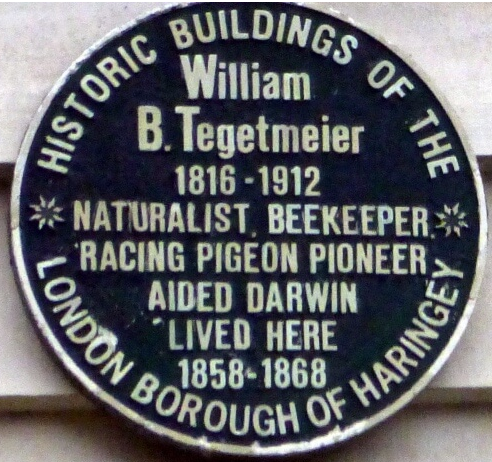
A Green Plaque at 101-103 St James Lane honours Tegetmeier as a pioneer in British natural history, beekeeping, and poultry breeding. His research helped support and expand the theory of evolution by offering evidence and insights into how selection and variation work in living things.