

High Cross United Reformed Church, near Priscilla Wakefield’s home
The Woman Who Invented Saving for the Poor
Priscilla Wakefield (1751-1832) was a key figure in early feminist thought and philanthropy, helping to drive social reform in England. Guided by her Quaker beliefs in equality and social justice, she wrote children’s books and social commentary, worked as an economist and abolitionist, and founded the Lying-in Charity for Women in 1791. She opened the School of Industry for Girls near Bruce Grove station in 1792, and in 1798, she started England’s first savings bank. The Frugality Bank, also called the Penny Savings Bank, was based in Tottenham and helped poor people, especially women and children, save money when they could not use regular banks. This bank was a major step toward financial inclusion. Wakefield introduced the idea of microsaving, showing that even small deposits could help people build financial security over time.
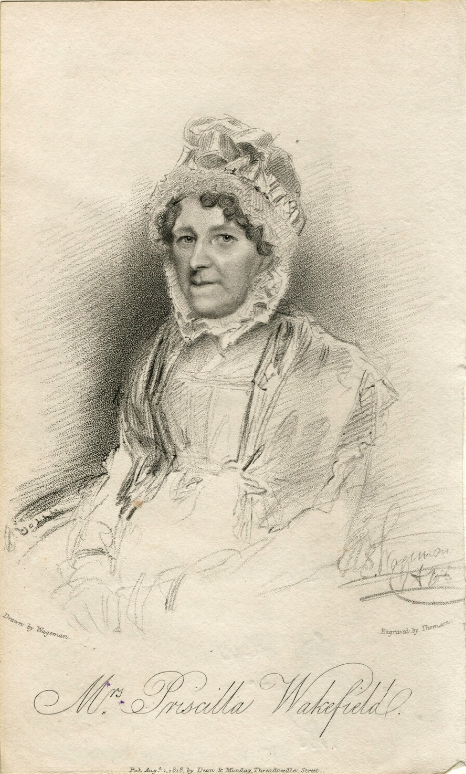
Wakefield’s feminist work was ahead of her time. She spoke out for women’s rights and education, and often wrote about why women should understand money and be independent. This was a bold stance in the late 1700s, when laws like coverture meant married women had no legal identity apart from their husbands. These laws made it hard for women to own property, sign contracts, or control their own earnings, so Wakefield’s push for financial independence was both daring and forward-thinking.
In her book Mental Improvement: Or, the Beauties and Wonders of Nature and Art (1794), Wakefield highlighted the importance of education for women, arguing that learning enabled them to contribute to society. She encouraged women to explore, enjoy nature, and appreciate art. Her book An Introduction to Botany (1796) was the first full survey of botany by a woman, and she used it to teach women about science and show they could succeed in fields usually led by men. In Reflections on the Present Condition of the Female Sex (1798), she spoke openly about women’s roles, called for their rights, and said women’s voices were needed in public debates. She also questioned the economic theories of her time, which were written by men, and pointed out how these ideas held women back.
Wakefield’s approach was more subtle than some of her peers, who were more direct in challenging male-dominated society. She supported women’s rights by focusing on moral and social responsibility rather than open protest. By talking about practical issues like financial literacy and savings, she reached more people. Even those who did not support feminist ideas saw her savings bank as a useful way to fight poverty.
The plaque honours a pioneer whose feminist beliefs and charity work helped shape social and financial institutions in England. Priscilla Wakefield’s ideas about financial inclusion were ahead of her time and connect to today’s efforts to make banking accessible to everyone. Her work still matters in current discussions about financial inclusivity.