
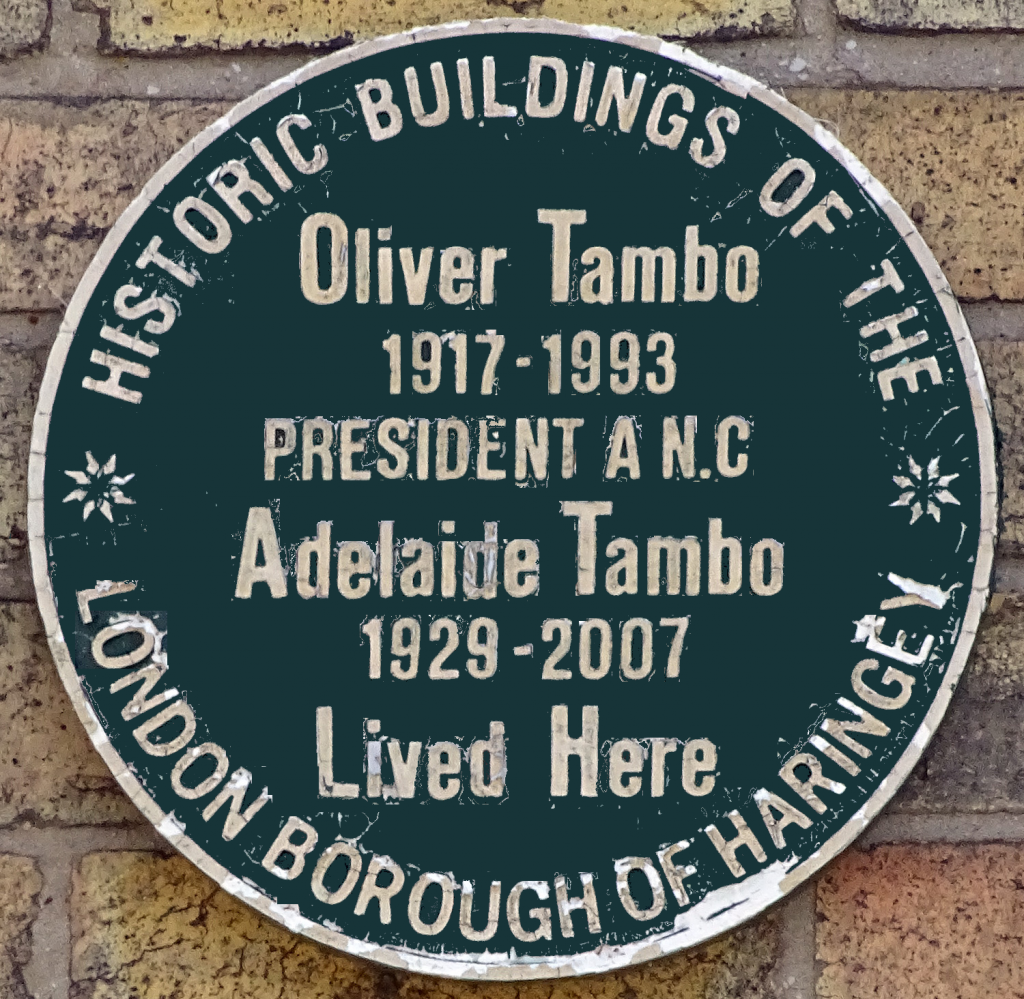
51 Alexandra Park Road, N10
From Muswell Hill to South Africa’s Freedom
For thirty years, Muswell Hill played a crucial role in the fight against racial segregation and oppression in South Africa. This was where Oliver and Adelaide Tambo, prominent exiled anti-apartheid activists, lived at 51 Alexandra Park Road. Their home in Muswell Hill became a place of refuge, organisation, and political exchange.
Oliver Reginald Kaizana Tambo was a key member of the African National Congress (ANC), the main group fighting apartheid. In 1943, he started the ANC Youth League with Nelson Mandela and Walter Sisulu, beginning his lifelong work for justice and equality.
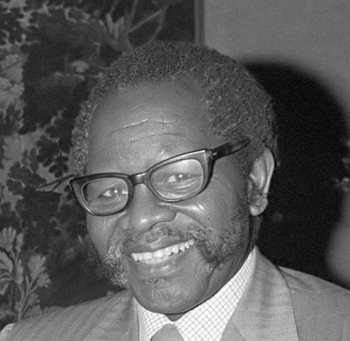
As the apartheid regime became more repressive, the Tambos had to go into exile. The South African authorities called the ANC a terrorist group, and its leaders risked arrest, imprisonment, or even worse.
Between 1960 and 1990, the Tambos played a central role in the fight against apartheid. With many of their friends in prison, they became key organisers, strategists, and symbols of the liberation movement. While living in exile, they worked hard to build international support. Oliver Tambo, once known for avoiding attention as a ‘modest revolutionary’, became a strong and effective diplomat. He spoke to world leaders, diplomats, and activists, urging them to support sanctions against apartheid and to back the liberation movement.
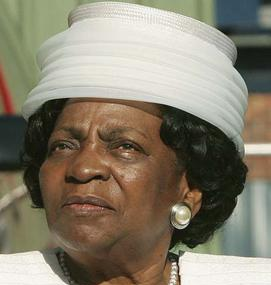
Adelaide Frances Tshukudu Tambo was a community organiser and political activist whose contributions to the anti-apartheid movement were both practical and strategic. While working as a nurse at Whittington Hospital, Adelaide brought her sense of care, discipline, and resilience into political life. Known affectionately as “Ma Tambo,” she helped create networks of support for South Africans in exile, offering guidance, solidarity, and practical assistance to activists, students, and families displaced by apartheid.
Adelaide Tambo played a key role in mobilising women in the liberation struggle. She co-founded the ANC Women’s Section in London, ensuring that women had a clear voice and an active role in the movement. Through meetings, fundraising, advocacy, and education, she helped challenge both apartheid and the marginalisation of women.
In 1990, as apartheid began to unravel, Oliver and Adelaide returned to South Africa to witness the release of Nelson Mandela and the unbanning of the African National Congress, milestones for which they had worked for decades. Sadly, Oliver Tambo died in 1993, just before South Africa’s first democratic elections in 1994. After Oliver’s death, Adelaide remained a respected moral and political figure in democratic South Africa until her death in 2007.
Oliver and Adelaide Tambos’ legacy endures as a testament to the power of determination and the international solidarity that helped end apartheid. Their work, both in Muswell Hill and on the global stage, significantly influenced the anti-apartheid movement and helped create a more just and inclusive South Africa.
In 2021, not far from where the Tambos once lived, Albert Road Recreation Ground was renamed Oliver Tambo Recreation Ground. There, his statue holds the Freedom Charter, the African National Congress’s statement of core principles that inspired Oliver and Adelaide Tambo.