
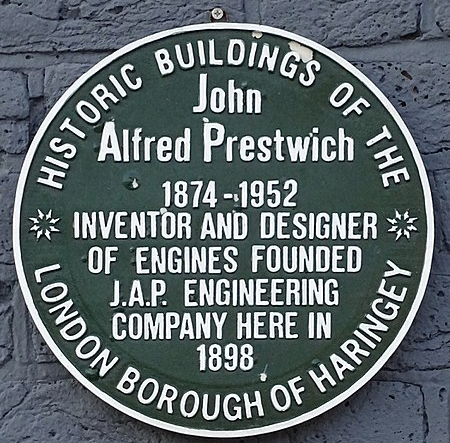
1A Lansdowne Road, N17
The Leonardo da Haringey
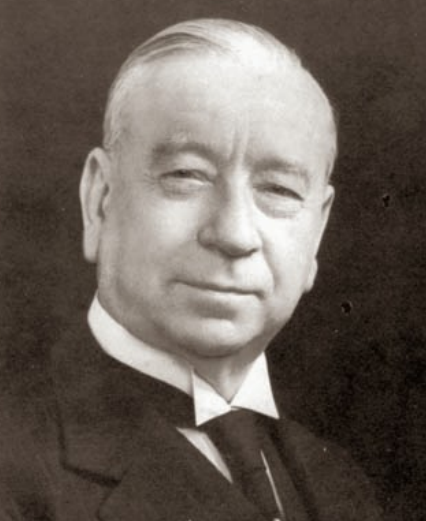
John Alfred Prestwich was a mechanical genius who helped shape the early 20th century. His work touched on a stunning range of industries: cinema, motorcycles, aviation, scientific instrumentation, printing, cutting and perforation machines and, yes, lead pencils. His ingenuity and a relentless passion for engineering made him a pivotal figure during rapid technological change.
At only 21, Prestwich started JA Prestwich Industries (JAP) in 1895, making equipment for the growing film industry. He built some of the first motion picture cameras as movies became popular. His skills helped fix important problems in film projection and recording, which helped commercial cinema grow. His cameras, known for being precise and sturdy, filmed Queen Victoria’s Jubilee in 1897, Scott’s Antarctic expedition in 1905, and were used by filmmakers around the world.
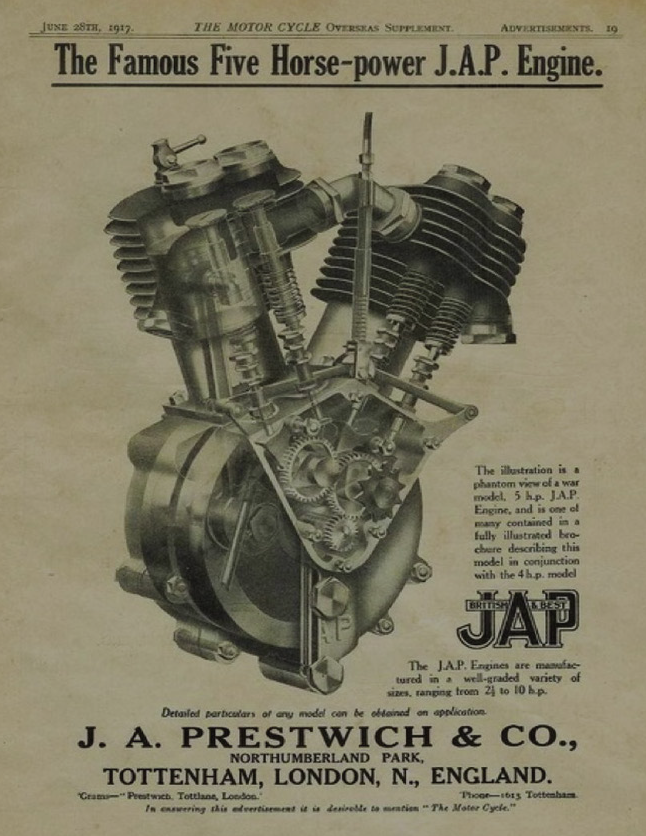
Prestwich did not limit himself to film. By the early 1900s, he turned his attention to internal combustion engines. This area became a big part of his legacy. He designed and built some of the first lightweight, high-performance petrol engines for motorcycles, cars, planes, military, and farm machines.
His motorcycle engines became famous for over fifty years and were used in many road, racing, and record-breaking bikes in the UK, Australia, and the USA. At one time, more than 80% of motorcycles on British racetracks used his engines, showing how popular they were.
Prestwich also played a role in early aviation. In 1909, a lightweight JAP engine powered the first all-British aircraft, the Roe I Triplane.
His workshops in Tottenham and later Haringey became centers of innovation, filled with experimental engines, cameras, and mechanical devices.
In 1918, the Franklin Institute of America gave him a Silver Medal for inventing the fluid pressure gauge, which “permitted an unskilled person to take more than 100 readings a minute to an accuracy of 0.0002 inch”. The next year, he was asked to design a machine for painting pencils for mass production. When the company that hired him went bankrupt, Prestwich bought their business. By 1951, his Master pencils reached an output of 1.5 million a week, making his company the largest pencil manufacturer in Europe.
During World War I, Prestwich made engines for the first drones, small vehicles, and film equipment used in training films. This work brought together both his skills in mechanics and cinema.
Prestwich kept inventing and improving technologies into the 1930s, though his company later stopped making engines after World War II. He died in 1952, leaving a legacy that connected entertainment, transportation, and aviation.
Today, John Alfred Prestwich is known as one of Britain’s greatest inventors. His innovative spirit, creativity, and contributions to British industry make the title “the Leonardo da Haringey” a well-earned tribute.