
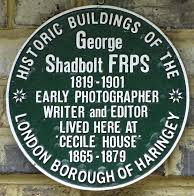
104 Crouch Hill, N8
The Giant of the Micro
When George Shadbolt became involved in the 1840s, photography was just getting started. Today, taking a photo is as easy as tapping a phone, but back then, the idea that light could make a lasting image seemed both amazing and new. Scientists were excited about it, and many artists were too, although some feared it might threaten their jobs. Photography was expensive, complicated, and slow. A professional camera could cost £50, about the same as an average year’s salary, and using it meant working with dangerous chemicals and spending hours to get a single picture.
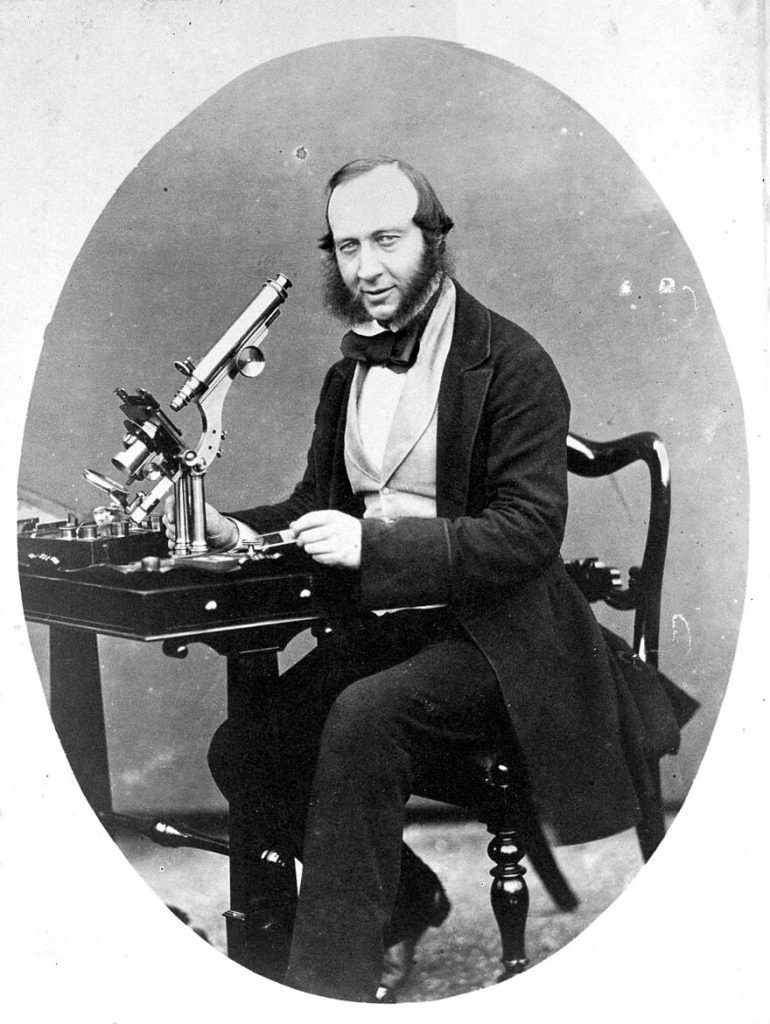
George Shadbolt helped shape both the technology and ideas behind early photography. He was deeply interested in optics and science, and soon became known for his technical skills and thoughtful writing. Shadbolt joined the Photographic Society (now the Royal Photographic Society) soon after its founding in 1853, and later became its editor. As editor of The Photographic Journal, he guided public conversations about photography’s future, bringing in new ideas, techniques, and debates for more people to consider. He was a strong supporter of amateur photographers at a time when photography was mostly for scientists, wealthy hobbyists, and commercial studios. Shadbolt published guides, letters, and articles for amateur readers, encouraging them to experiment and share techniques with others. His approach helped make photography more open and welcoming to everyone.
Shadbolt was one of the first to try taking extremely small photographs, so tiny they could only be seen clearly with a microscope. He was drawn to microphotography because it brought together his interests in optics, lenses, and scientific experiments. Shadbolt saw it as a useful tool for teaching, storing information, and research. In 1854, he showed a microphotograph that fit a whole newspaper page onto a space as small as a pinhead, which was amazing at the time. This kind of microphotography was groundbreaking because it showed how photography could pack a lot of information into a tiny space, leading the way for things like microfilm and modern archiving. Shadbolt’s work made him a pioneer at the crossroads of photography and information science.
The Green Plaque in Crouch Hill recognises George Shadbolt’s important work in photography, both as a science and as a way to communicate, and his support for amateur photographers. His technical ideas, leadership as an editor, and belief in photography’s value for learning helped make photography more open and available to everyone. Today, photography is still a key way we see and share the world, thanks in part to his efforts.