
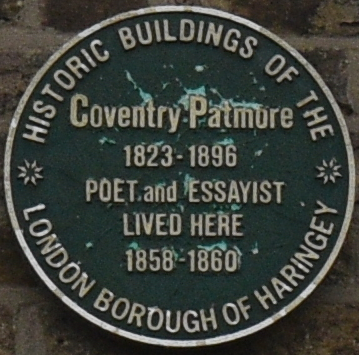
85 Fortis Green, N2
Coventry Kersey Dighton Patmore was one of the greatest Victorian poets you may have never heard of. And possibly also one of the most controversial, celebrated and criticised at the same time for his beliefs.
His most famous poem, The Angel in the House, showed an idealised view of love, marriage, and home life that supported the traditional gender roles of the Victorian era. In it, women are portrayed as submissive, virtuous, selfless, and morally better than men, with a focus on their roles as wives and mothers. First published in 1854 and expanded in 1864, The Angel in the House became popular in both Britain and the United States, and its influence lasted into the twentieth century as it was included in many English Literature courses.
Patmore lived at 85 Fortis Green, Muswell Hill, now a listed building, from 1858 to 1860. During this time, he married his second wife, Emily Augusta Andrews, who greatly influenced his work and inspired the third part of his poem, Faithful For Ever, published in 1860.
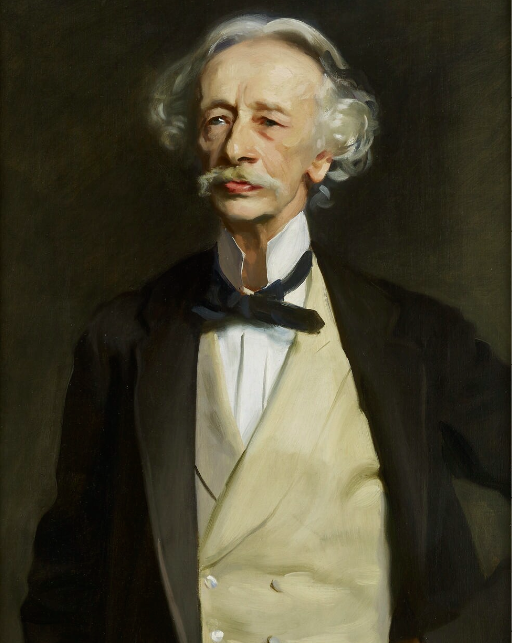
His home at Fortis Green likely hosted gatherings with leading figures in Victorian poetry and literature, such as John Ruskin, Thomas Carlyle, Alfred Lord Tennyson, and Gerard Manley Hopkins. Patmore was also involved with the Pre-Raphaelite Brotherhood, working alongside artists such as William Holman Hunt, John Everett Millais, and Dante Gabriel Rossetti.
Patmore was admired for his poetry. Thomas Hardy, who did not share Patmore’s beliefs, called him ‘Tennyson’s lovelier successor’. While The Angel in the House appealed to many Victorians, especially conservatives, it was also criticised for its unrealistic and limiting view of women. Well-known writers like George Eliot and Elizabeth Barrett Browning spoke out against the narrow way women were shown in Patmore’s work.
Later, Virginia Woolf famously used the phrase ‘killing the Angel in the House’ in her 1931 essay Professions for Women to show her rejection of society’s constraints and the traditional roles given to women.
By sparking criticism and debate, Patmore’s works prompted discussions about gender roles and the expectations society placed on women. These debates helped shape the ongoing conversation about these issues during the Victorian era.
Patmore’s popularity declined in his later years as tastes and views on gender roles changed. Although he is not widely read today, his importance comes from his impact on the literature and culture of his time. Scholars and students still study his work to better understand the Victorian era, literary traditions, and ongoing discussions about gender roles.