
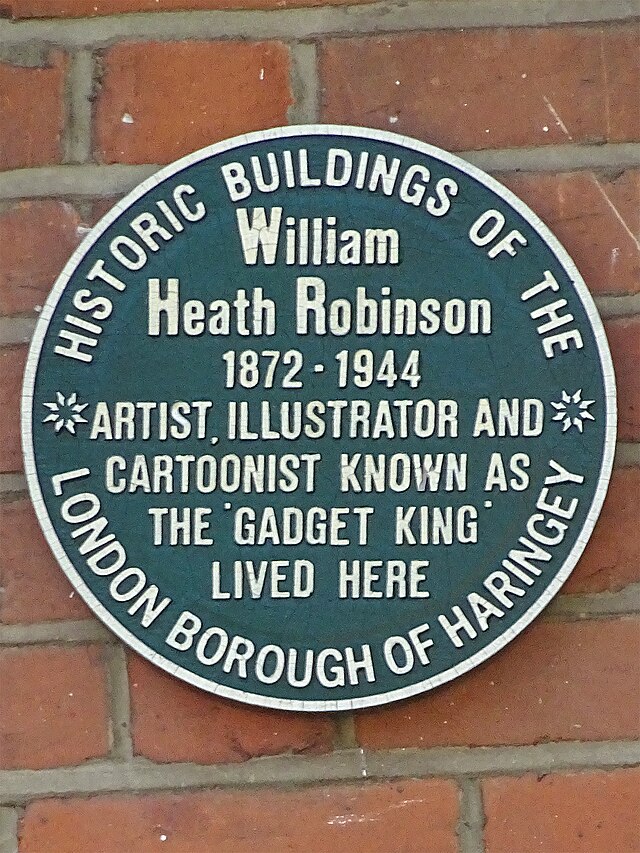
25 Southwood Avenue
The Gaget Man
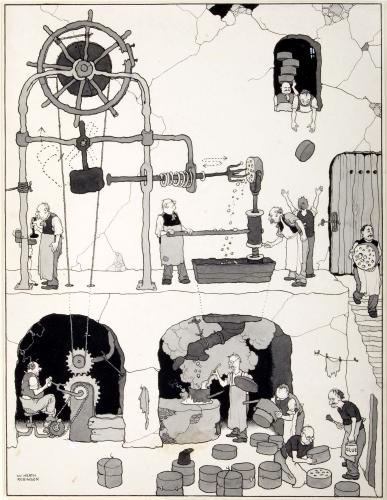
Imagine a room-sized, hand-cranked pancake machine, a factory built just to punch holes in cheese, a dance hall with huge jazz-playing bagpipes, or a spaghetti-stretching device. William Heath Robinson dreamed up all these and more. Born on May 31, 1872, in Hornsey Rise, he became famous for his playful drawings of overly complex machines that tackled simple problems in the most roundabout ways. His creative style turned ordinary things into wild inventions, charming people with his sense of fun and imagination.
Robinson’s drawings appeared in many magazines and books, earning him considerable attention during his lifetime. He created illustrations for The Strand Magazine, Punch, and other well-known publications. His impact went beyond just humour, he was linked to the Art Deco movement and inspired other artists with his original style.
During the First World War, Robinson mixed humour with social commentary in his art. His drawings captured both the fast-changing technology and the strange side of the conflict, while also showing sympathy for soldiers and the tough conditions they faced. Some of his work was used as propaganda, encouraging people to enlist and support the war through funny but meaningful images.
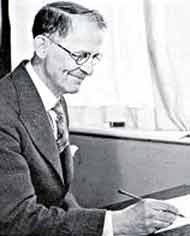
Heath Robinson also made a significant mark on 20th-century advertising. He created over 250 illustrations for products like Gordon’s Gin, Oxo, and Lyle’s Golden Syrup. His clever and creative ads helped shift marketing away from long blocks of text and showed how powerful pictures could be. Many illustrators and advertisers followed his lead, inspired by his fresh approach.
By 1914, dictionaries were already using his name to mean strange and clever gadgets. In the 1920s, newspapers and magazines called him the ‘Gadget King’.
Even though Robinson was known for his funny, complex drawings, he was also a dedicated artist who worked in many styles. He painted landscapes, portraits, and still lifes, showing both skill and range. Many of his paintings captured the beauty of the English countryside and his love for nature.
William Heath Robinson and his family lived at 25 Southwood Avenue from 1931 to 1944. The Green Plaque honouring his work shows how much imagination matters and reminds us to see art in different ways. While he’s famous for his funny inventions, his more serious art adds depth and richness to his legacy.
The Heath Robinson Museum opened in Pinner in 2016 and celebrates his life and work. The museum displays his art and explores the ideas of invention and creativity that run through his work. You can also visit the museum online at https://www.heathrobinsonmuseum.org/.ne at https://www.heathrobinsonmuseum.org/.